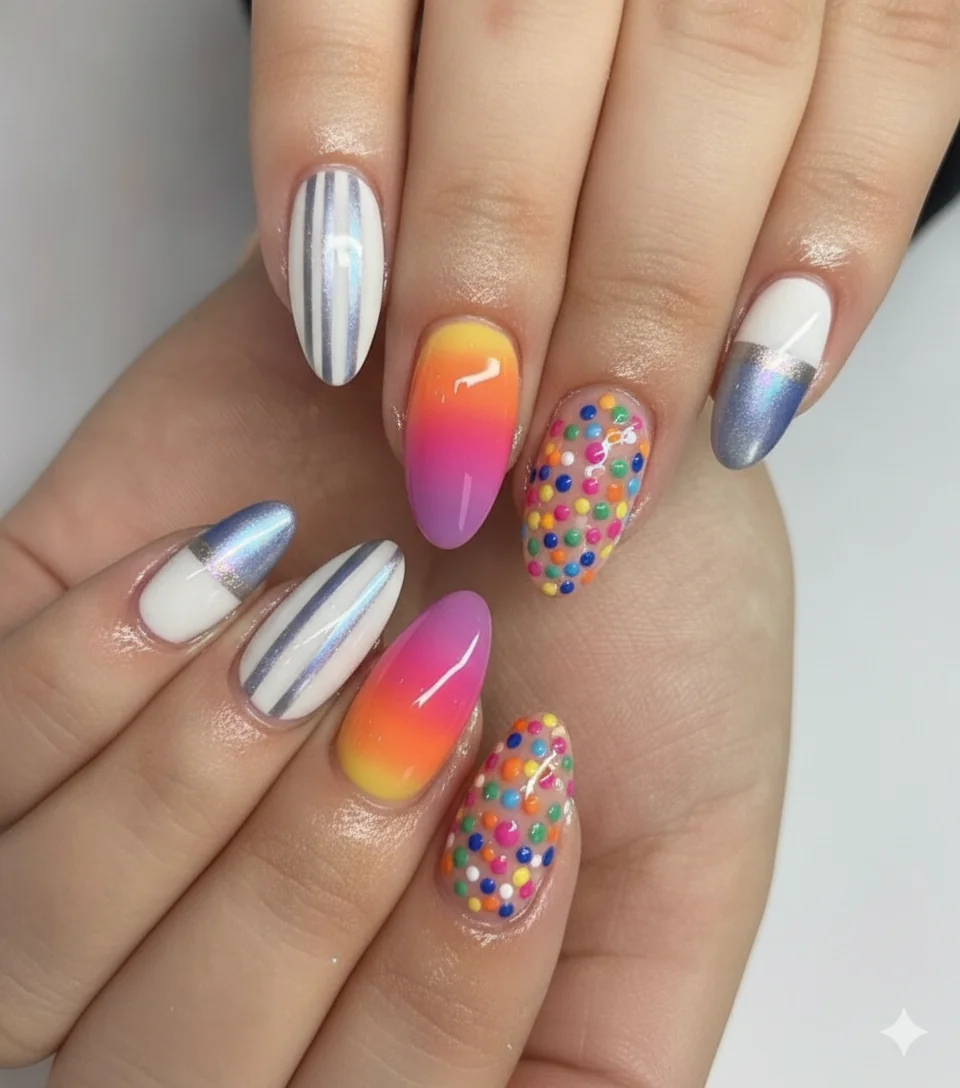
Two days. That's how long it usually takes before a fresh coat of polish starts lifting at the tips, chipping at the edges, or just looking tired. You've tried the nail hacks at home that everyone shares, the ice water trick, the extra top coat, the "let it dry longer" advice, and the results barely move the needle. Meanwhile, a salon manicure walks out the door looking the same on day twelve as it did on day one.
The gap isn't the polish. It's not even your hand-eye coordination. It's a handful of specific, mostly invisible steps that salons do as standard and most people skip entirely at home, plus a set of tool substitutions that solve the "I don't own a dotting tool" problem in about four seconds.
This is nail hacks at home, organised properly. Not seventy-three random tips dumped into a numbered list and left to fend for themselves, but seventy-three hacks grouped by the actual problem they solve: prep that's being skipped, application habits that cause chipping, nail art you think needs tools you don't have, longevity tricks that double your wear time, the trending finishes everyone assumes need a professional kit, the cleanup that separates "did this myself" from "did this myself, badly," and the removal mistakes that damage your nails more than the polish ever did.
Each hack gets the same three things: why it works, how to do it, and what goes wrong if you skip the detail that matters. Skip to the section that matches your frustration, or read straight through. Either way, by the end you'll understand exactly what your salon has been doing differently this whole time.

Why Your At-Home Manicure Fails (and What Salons Do Differently)
Three things cause nearly every chipped, peeling, or short-lived DIY manicure: skipped dehydration prep, coats applied too thick, and a free edge that's never been capped. Salons handle all three as a matter of routine. Most at-home manicures handle none of them, which is the entire gap in a sentence.
Start with prep. Your nail plate holds onto natural oils, hand cream residue, and moisture, all of which sit between the polish and the nail like a layer of cling film. Polish doesn't bond to cling film. A salon technician wipes every nail with a dehydrator or alcohol-based prep solution before a single brush touches the surface, and that one pass is doing more for your manicure's lifespan than any top coat ever will.
Then there's coat thickness. A thick coat of polish looks satisfying going on, glossy, opaque, done in one swipe, but thick polish shrinks unevenly as it dries, and that shrinkage creates internal stress. The stress shows up two days later as a hairline crack at the stress point, usually right at the tip. Three thin coats beat one thick coat, and while it takes slightly longer, the manicure lasts roughly twice as long.
And then capping. Why does nail polish chip so fast at home? Three causes, in order of impact: skipped dehydration prep, coats applied too thick, and a free edge that's never sealed. Salons address all three as standard. Most DIY manicures address none of them. Capping the free edge means painting your base coat, colour, and top coat horizontally across the very tip of the nail, not just the top surface. The free edge is the weakest point of any manicure, the place where your nail meets daily life, and without sealing it, even the best polish starts lifting from the edges within days.
None of this requires gel, a lamp, or a forty-minute routine. It requires doing three specific things you've probably never done, in an order that takes about ninety extra seconds total. According to at-home manicure tips from professional nail technicians, this is precisely the gap between a manicure that photographs well on day one and one that still looks intentional on day ten. The same logic applies to the skin around your nails. Cuticles that are cut rather than pushed back create a wound site, and the fingernail care guidance from the Mayo Clinic is consistent on this point: pushing, not cutting, is the safer long-term habit.

Prep Hacks: The Foundation That Makes Everything Else Work
Every nail hacks at home list jumps straight to polish. That's the mistake. Twelve hacks, none of which involve a single drop of colour, and all of which determine whether everything that follows actually sticks.
1. Dehydrate the nail plate with rubbing alcohol before base coat
Mechanism: removes oils so polish bonds to nail, not residue.
Method: 1) Soak a cotton pad with rubbing alcohol. 2) Wipe each nail once, tip to cuticle. 3) Let it flash off for thirty seconds.
Skip it, and your manicure starts failing within 24 hours.
2. Roll the polish bottle, never shake it
Mechanism: shaking creates air bubbles that show up as texture on the nail.
Method: 1) Roll the bottle between your palms for ten seconds. 2) Tip upside down once if separated.
Shake it, and bubbles bake into your top coat permanently.
3. Push cuticles back with a warm washcloth, not a metal pusher
Mechanism: heat softens cuticle tissue without the trauma of metal tools.
Method: 1) Soak a washcloth in warm water. 2) Wrap fingertips for two minutes. 3) Push gently with a towel-wrapped thumb.
A metal pusher used dry tears the cuticle and invites infection.
4. File in one direction only, never saw back and forth
Mechanism: sawing creates micro-tears in the nail's layered structure.
Method: 1) Angle the file at 45 degrees. 2) Stroke from edge to centre, one way. 3) Repeat on the other side.
Sawing weakens the nail and causes splitting weeks later.
5. Buff ridges with a 4-way buffer, but only once a month
Mechanism: buffing thins the nail plate slightly with each pass.
Method: 1) Use the coarsest side first. 2) Move to the smoothing side. 3) Finish with the shine side.
Buff weekly, and nails become noticeably thinner and weaker.
6. Soak hands in warm water to soften cuticles, then dry completely before polish
Mechanism: water expands the nail plate temporarily; polish applied wet won't bond.
Method: 1) Soak for five minutes. 2) Pat dry thoroughly. 3) Wait a further ten minutes before polish.
Polish over damp nails peels within a day.
7. Remove shine from the nail surface before applying press-ons
Mechanism: a glossy nail surface gives adhesive nothing to grip.
Method: 1) Lightly buff the top layer of each nail. 2) Wipe away dust. 3) Apply adhesive immediately.
Skip this, and press-ons lift within hours.
8. Use white nail polish as a base coat for any bright colour
Mechanism: white cancels the natural yellow tone of the nail bed, true-ing up the final shade.
Method: 1) Apply one thin coat of white. 2) Let it dry fully. 3) Apply colour as normal.
Without it, brights look muddy and uneven.
9. Apply a thin layer of rubbing alcohol immediately before base coat
Mechanism: the final pass removes any residue from filing or buffing.
Method: 1) Wipe each nail once more, right before base coat. 2) Don't touch the nail surface afterwards.
Touching the nail after this step reintroduces the oils you just removed.
10. Push back cuticles after soaking, never when dry
Mechanism: dry cuticle tissue tears rather than pushes.
Method: 1) Soak first. 2) Push gently with a cuticle stick. 3) Wipe away any lifted skin.
Pushing dry cuticles causes hangnails and bleeding.
11. Shape nails before polish, never after
Mechanism: filing after polish chips the edges of the finished colour.
Method: 1) File and shape completely. 2) Wipe away dust. 3) Begin prep, then polish.
Filing post-polish leaves a chipped edge from the very first day.
12. Let any oils fully absorb before starting, minimum 30 minutes
Mechanism: hand cream and cuticle oil sit on the nail surface for longer than they feel like they do.
Method: 1) Apply oils at least 30 minutes before you plan to polish. 2) Wash hands with soap before starting prep. 3) Dehydrate as the final step regardless.
Skip the wait, and oil residue undermines every other prep step you've just done.
If you want the hacks above to actually compound over time rather than reset every few days, the foundation is a daily nail care routine, because prep on manicure day only works as well as the condition of the nail underneath it.